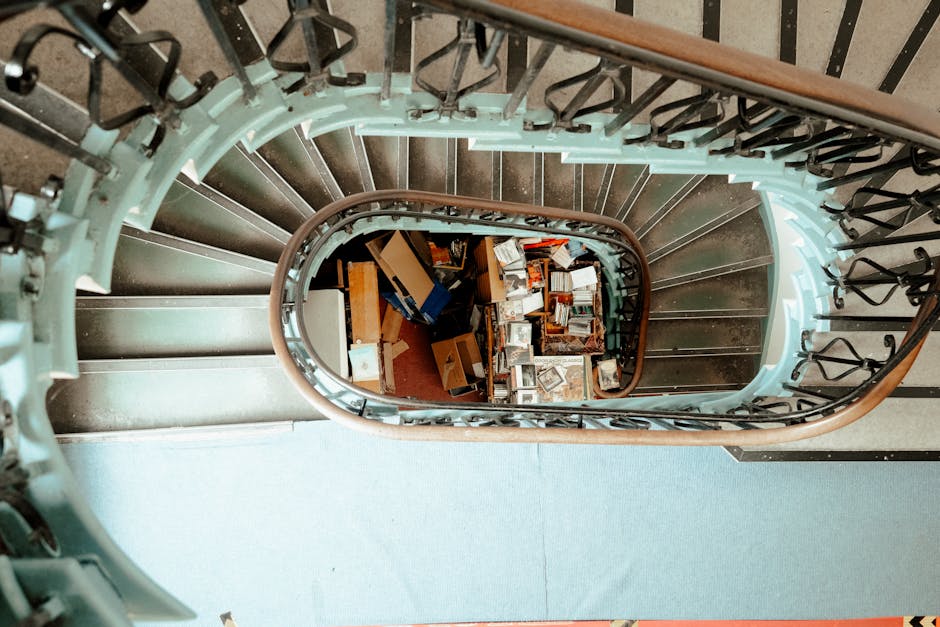
Moving out of Boundary Estate? Tips for tight staircases
If you are moving out of Boundary Estate, you already know the main challenge is not always the van outside. It is the stairwell. Narrow turns, awkward landings, old railings, low-light corners, and the sort of angles that make a wardrobe look suddenly three times its actual size. Tough on the back, tough on the nerves, and honestly a bit of a puzzle.
This guide on Moving out of Boundary Estate? Tips for tight staircases is built for that exact problem. It explains how to plan the move, what to measure, how to protect your furniture, when to dismantle items, and when to stop trying to be a hero. If you are dealing with a flat removal, a student move, or a full household shift, the right preparation can save time, reduce damage, and make the day far calmer than it first looks.
To be fair, most staircase problems are solvable. Not always easily. But solvable.
Table of Contents
- Why Moving out of Boundary Estate? Tips for tight staircases Matters
- How Moving out of Boundary Estate? Tips for tight staircases Works
- Key Benefits and Practical Advantages
- Who This Is For and When It Makes Sense
- Step-by-Step Guidance
- Expert Tips for Better Results
- Common Mistakes to Avoid
- Tools, Resources and Recommendations
- Law, Compliance, Standards, or Best Practice
- Options, Methods, or Comparison Table
- Case Study or Real-World Example
- Practical Checklist
- Conclusion
- Frequently Asked Questions
Why Moving out of Boundary Estate? Tips for tight staircases Matters
Boundary Estate has the kind of staircases that remind you why move planning matters. Many flats in older London buildings were not designed around modern furniture dimensions, flat-pack bulk, or the occasional oversized sofa that looked modest in the showroom. A stairwell can be visually deceptive too. What looks "fine" from the hallway may become impossible at the first corner.
That matters because the risk is not just inconvenience. Tight staircases can lead to scuffed walls, broken banisters, scratched furniture, strained backs, and delays that affect lift access, parking windows, and neighbours' patience. If you have ever stood halfway up a stairwell wondering how a mattress is meant to turn without taking a lamp, a wall, and your dignity with it, you are not alone.
This is also where good planning supports a smoother overall move. If you are already sorting belongings, it helps to read expert tips for decluttering before moving house and this step-by-step guide to packing for moving house. In a compact property, every reduced box count makes the staircase easier to manage.
The bigger reason this topic matters is simple: staircase moves are about control. When access is tight, small decisions become important. The angle of a sofa. The order boxes come down. Whether a bed frame is stripped in advance. Whether the mover has room to pause on the landing. These details can turn a stressful job into a manageable one.
How Moving out of Boundary Estate? Tips for tight staircases Works
The process works best when you treat the staircase like a moving route, not just a passageway. That means measuring, visualising, dismantling, protecting, and sequencing the move in the right order.
Start with measurements
Measure the widest and narrowest points of the route, not just the front door. Check:
- door widths
- stair width
- ceiling height on landings
- turning space at each bend
- banister clearance
- the dimensions of the largest items
It sounds obvious, but people often measure one part and assume the rest will behave. It rarely does.
Break the move into item categories
Not everything should be handled the same way. Boxes can usually be stacked, furniture often needs protection, and bulky items may need dismantling or specialist handling. A mattress can bend slightly; a heavy wardrobe cannot. A piano is a whole different matter and should be approached with professional caution, as explained in why professionals are your best bet for piano moving.
Use the staircase as a sequence
When movers work in tight areas, the order matters. Usually the easiest items go first, creating momentum and reducing clutter on landings. The awkward items should be handled when the route is clear and the team is fresh. Nobody wants a double mattress wedged at the top of the stairs while someone is trying to bring down a box of books. That is how little problems become big ones.
Think about angle and rotation
Many large pieces do not fail because they are too wide in a straight line. They fail because they cannot rotate through a turn. Sofas, wardrobes, desks, and bed bases often need to be tilted, stood on edge, or moved diagonally. This is where experience helps. A piece can be technically small enough, yet still impossible to pivot through an awkward landing.
Allow for safe lifting and pauses
Staircases are tiring. Even a short run can become exhausting when repeated. Good moving practice includes pauses in sensible spots, steady communication, and correct lifting methods. If you want a deeper explanation of handling technique, see a deeper look into kinetic lifting techniques and the secrets to singlehandedly lifting heavy items. The main takeaway: don't twist under load, don't rush the turn, and don't guess when you can check.
Key Benefits and Practical Advantages
Handling a Boundary Estate move properly gives you more than just a smoother exit. The benefits are practical and immediate.
- Less damage: Protection and planning reduce knocks, scrapes, and torn upholstery.
- Less stress: You are not improvising at the bottom of the stairs with a sofa stuck sideways.
- Faster progress: A clear route and sorted item order save time.
- Better use of help: Friends, family, or movers can focus on the hard parts instead of reworking the whole plan on the spot.
- Safer lifting: Fewer awkward lifts means less strain on backs, shoulders, and knees.
- Cleaner handover: If the move-out is organised, end-of-tenancy cleaning is easier to manage afterwards. For that, the ultimate guide to move-out house cleaning is a useful companion read.
There is also a quieter benefit: confidence. When the exit route is mapped out, the day feels more predictable. And that counts for a lot when you are standing in a narrow communal staircase at 8:15 in the morning with boxes, tape, and the smell of old paint in the air.
Who This Is For and When It Makes Sense
This approach is especially useful if you are in a flat with tight internal stairs, older communal access, split-level layouts, or a building where the lift is too small, too slow, or not available at all. In Boundary Estate-style properties, that is not unusual.
It makes sense for:
- tenants moving out of upper-floor flats
- students leaving compact accommodation
- small families shifting between local homes
- people moving with bulky furniture
- anyone on a time-limited move-out day
It is also a good fit if you are moving items into storage, which is often the case when completion dates and tenancy dates do not line up neatly. In that situation, storage in Spitalfields can be a practical bridge between homes.
And if your move is quite small, the same logic still applies. One awkward wardrobe can cause more trouble than ten neat boxes. Funny how that works, really.
Step-by-Step Guidance
1. Survey the route before moving day
Walk the full path from the room to the van. Check stair widths, corners, door handles, overhead lights, and any narrow spots near railings or pipework. If possible, note the route with photos on your phone. That tiny step can prevent a lot of second-guessing later.
2. Decide what must be dismantled
Anything large enough to resist a bend in the staircase should be dismantled where possible. Bed frames, table legs, shelving units, and some wardrobes are obvious candidates. If you are moving a mattress and bed base, this guide on transporting your bed and mattress safely is useful because bedding items are often the first awkward bulky pieces to move.
3. Pack for the stairwell, not just the van
Boxes should be sturdy, not overfilled, and closed properly. Heavy items like books go in smaller boxes. Light but awkward items should be wrapped so they do not catch on bannisters. If you need boxes or packing supplies, packing and boxes in Spitalfields is a sensible place to start.
4. Protect the building as well as the furniture
Use blankets, corner guards, and floor protection if needed. In older stairwells, walls can be slightly uneven and banisters can pick up marks very easily. A few minutes of padding is better than a long apology afterwards.
5. Move the route in the right order
Clear the easy items first. Then larger furniture. Leave the most awkward piece for when the route is fully open and everyone knows their job. If you have more than one helper, assign one person to call the pace and direction. Clear communication really does help. "Hold." "Pause." "Turn." Short words, no drama.
6. Re-check at each landing
Landings are where most staircase problems show up. If an item is halfway through a turn and it suddenly looks too wide, stop and reassess. A quick reset is better than forcing the piece and scratching the wall or trapping fingers. A calm pace can save the move, honestly.
7. Keep a fallback plan
If something will not fit, know in advance what happens next. Can it be dismantled? Can it be moved separately? Does it need temporary storage? Having a fallback plan stops panic when the item does not behave the way you expected it to.
Expert Tips for Better Results
These are the small things that make a large difference.
- Measure with the item on its side. A wardrobe's "height" may not be the issue; its width on a turn might be.
- Remove doors, shelves, and drawers early. Less bulk means less swinging weight.
- Wrap corners separately. The corners are usually what hit first.
- Don't overpack boxes. Stair moves punish heavy boxes more than ground-floor moves do.
- Use gloves with grip. They help when lifting smooth or slightly dusty surfaces.
- Keep the stairs clear. One stray box in the wrong place can interrupt the whole sequence.
- Plan around neighbours. Shared hallways in older estates often mean tighter timing and more courtesy is needed.
If you are moving a sofa, it may be worth reading top strategies for preserving your sofa during storage too, especially if the piece is going straight into storage after the move. A sofa wrapped badly before a staircase move tends to show every scuff later.
One quiet tip: take five minutes just before the heavy lifting starts and look at the route again. People often skip this because they are eager to begin. But the staircase might have a different idea after the first few boxes are out. Happens all the time.
Common Mistakes to Avoid
These are the errors that most often turn a manageable move into a messy one.
- Not measuring the largest items properly. Guessing is how furniture gets stuck.
- Forcing furniture around corners. If it needs a smarter angle, stop and reset.
- Using oversized boxes for heavy items. A huge box full of books is a back injury waiting to happen.
- Ignoring the landing space. Many movers focus on stairs and forget the turn at the top or bottom.
- Moving in the wrong order. Put the awkward item first only if it is the safest choice, not because it feels efficient in the moment.
- Skipping protection. Even a small knock can leave a visible mark on painted walls or softwood bannisters.
- Rushing helpers. Faster is not better if someone loses balance on a turn.
The biggest one is probably this: assuming the staircase will "work out." It usually does not, not on its own. It needs a plan.
Tools, Resources and Recommendations
You do not need a van full of specialist kit for every move, but a few items make tight staircases much easier to deal with.
- Furniture blankets: help protect surfaces from scuffs.
- Stretch wrap: useful for keeping drawers shut and securing loose parts.
- Ratchet straps or strong tie-downs: helpful for safe transport once items are out of the building.
- Work gloves: improve grip and reduce the chance of rubbing or slipping.
- Corner protectors: especially useful in narrow hallways and stairwells.
- Toolkit and screw bags: keep dismantled parts together, because losing one bolt can waste half an hour. Been there, regrettably.
- Labels and tape: make it easier to identify which items need to come down first.
For broader moving support, it can help to look at the full services overview and furniture removals in Spitalfields if you have large pieces that need care through tight access. If you are moving a whole property rather than one or two items, house removals in Spitalfields may be the more appropriate route.
Sometimes people ask whether a man and van service is enough. Often it is for smaller moves, but access conditions matter more than volume alone. A compact van does not solve a stairwell that turns sharply at the second landing. It helps, but it is not magic.
Law, Compliance, Standards, or Best Practice
For a residential move, there is usually no special law unique to Boundary Estate staircases, but there are important best practices and safety duties to keep in mind. In the UK, moving activities should be carried out safely, with sensible manual handling, clear communication, and care for both people and property.
If you are hiring movers or helping with the job yourself, best practice generally includes:
- avoiding lifts that are too heavy or awkward for one person
- using correct manual handling technique
- keeping communal areas clear
- not blocking fire exits or escape routes
- protecting walls, flooring, and fixtures where practical
- checking access arrangements in advance if the building has rules
If the building has a managing agent, leasehold rules, or shared access arrangements, it is sensible to check whether there are time restrictions, parking limitations, or requirements for protecting communal areas. That is especially relevant in older blocks where hallways are narrow and neighbours share the same access. A little courtesy goes a long way.
For reassurance around how a moving provider approaches safety and accountability, it can be worth reviewing pages such as the health and safety policy, insurance and safety information, and the accessibility statement. Those pages give a better sense of how safety and access needs are handled in practice.
Options, Methods, or Comparison Table
When stair access is tight, there are usually a few ways to handle the move. The best choice depends on the item, the route, and how much risk you are willing to take on.
| Method | Best for | Pros | Watch-outs |
|---|---|---|---|
| Carry in one piece | Smaller furniture, boxes, light items | Fast, simple, minimal dismantling | Can fail quickly on tight turns if measured poorly |
| Dismantle before moving | Wardrobes, beds, desks, shelving | Easier through stairwells, lower collision risk | Needs tools, time, and careful reassembly |
| Use protective wrapping and pivoting | Sofas, mattresses, medium furniture | Good balance of speed and control | Needs experience and enough landing space |
| Move to storage first | When the next property is not ready | Reduces pressure on moving day | Extra handling and possible storage costs |
| Bring in specialist removers | Bulky, valuable, or awkward items | Better handling, safer route planning | Usually costs more than DIY help |
In practice, the best move often combines two or three of these methods. For example, a bed frame might be dismantled, a sofa wrapped and turned carefully, and smaller boxes carried separately. That mix tends to work better than trying to force everything into one style.
Case Study or Real-World Example
Picture a typical Boundary Estate flat on a drizzly Friday morning. The tenant has a double bed, a two-seater sofa, a bookcase, and a stack of boxes. The staircase is narrow, with a turn halfway down and a landing that barely gives two people enough room to stand side by side.
Instead of starting with the sofa, the move begins with the smaller boxes, clearing the route and reducing clutter. The bed is dismantled in advance, with screws bagged and labelled. The bookcase shelves are removed, which makes the frame lighter and easier to rotate. The sofa is wrapped at the corners, then turned slowly at the landing with one person guiding and another watching the wall clearance.
There is a small snag, of course. The sofa arm catches slightly on the turn. Nothing dramatic. The team pauses, tilts the angle by a few degrees, and the piece clears. No damage, no panic, no loud sighs from the stairwell. Just a careful reset.
That is usually how these moves go when they go well. Not perfectly. Just calmly enough.
For people who want a calmer moving day overall, experience a calm and collected house relocation offers a useful mindset alongside the practical steps here.
Practical Checklist
Use this before moving day, especially if the staircase is tight.
- Measure the widest furniture pieces and the narrowest staircase points.
- Check all landings, turns, and door clearances.
- Decide what will be dismantled.
- Pack heavy items into smaller boxes.
- Wrap corners, edges, and delicate surfaces.
- Label boxes clearly.
- Prepare tools, tape, and protective materials.
- Protect floors, walls, and bannisters where needed.
- Plan the moving order in advance.
- Keep a fallback option for oversized items.
- Confirm parking and access arrangements.
- Set aside extra time for the staircase section of the move.
Expert summary: Tight staircases are less about brute strength and more about preparation, angles, and patience. Measure first, dismantle what you can, protect what you cannot, and do not force bulky furniture through a route that is clearly asking for a different plan.
Conclusion
Moving out of Boundary Estate with a tight staircase is rarely a straight line, but it does not need to become a nightmare. The buildings may be older, the turns may be awkward, and the landing may feel a touch too small for modern furniture, yet a careful approach changes everything. Measure properly. Pack sensibly. Dismantle early. Communicate clearly. And give yourself enough time to do the job without hurrying through the hardest part.
If you are planning a move with bulky items, take the staircase seriously from the start rather than treating it as a minor detail. That one decision often saves the most time, money, and stress.
Get a free quote today and see how much you can save.
And if the day feels a bit too full of corners and complication, that is normal. A good move is rarely flashy. It is just quietly well handled, one careful step at a time.
Frequently Asked Questions
How do I know if my furniture will fit down a Boundary Estate staircase?
Measure the furniture at its widest point and compare it with the narrowest part of the route, including turns and landings. If a piece only fits in a straight line but not on the pivot, it may need dismantling or professional handling.
What furniture usually causes the most trouble on tight stairs?
Sofas, wardrobes, mattresses, bed frames, and large desks are the usual culprits. They are awkward not just because of size, but because they often need to turn mid-route.
Should I dismantle everything before moving out?
No, not everything. Focus on large or awkward pieces first. Small, sturdy items are often better left intact. The aim is to reduce risk and bulk, not to turn the move into a flat-pack marathon.
Is a man and van service enough for a tight staircase move?
Sometimes yes, especially for smaller moves. But access matters more than volume alone. If the staircase is very narrow, or the furniture is unusually large, you may need furniture removals support or a more experienced team.
How can I protect the walls and bannisters during the move?
Use furniture blankets, corner guards, and careful handling at each turn. It also helps to clear the route fully so items are not scraped against surfaces while squeezing past.
What should I do if a piece gets stuck halfway down the stairs?
Stop moving immediately and reassess the angle. Do not force it. Often the solution is a slight tilt, a pause to change grip, or removing another part of the item if possible.
Can I move a mattress down a narrow staircase on my own?
Some mattresses can be handled by one person, but staircase shape, size, and weight matter. If the route is awkward or the mattress is bulky, an extra pair of hands makes a big difference.
How much extra time should I allow for a staircase-heavy move?
It varies, but it is wise to allow more time than you would for ground-floor access. Tight stairs slow movement, especially when furniture needs turning or pausing on landings.
What packing mistakes make staircase moves harder?
Overfilled boxes, loose lids, poor labelling, and weak tape are the big ones. Heavy boxes are harder to carry safely, and loose packaging can catch on railings or hands.
Do I need to tell my landlord or managing agent about the move?
In many buildings, yes, or at least it is wise to check. Some properties have access rules, time restrictions, or parking requirements. A quick message ahead of time can prevent avoidable problems on the day.
Where should I put items that cannot safely go down the stairs?
If an item will not fit or feels unsafe, temporary storage is often the cleanest solution. That way the move can continue without forcing a risky lift. It is better to pause than to damage furniture or the building.
What is the safest way to prepare for moving day in a building with tight access?
Measure early, declutter first, pack carefully, and plan the order of loading before anyone starts lifting. A calm, organised route is much safer than trying to improvise under pressure.