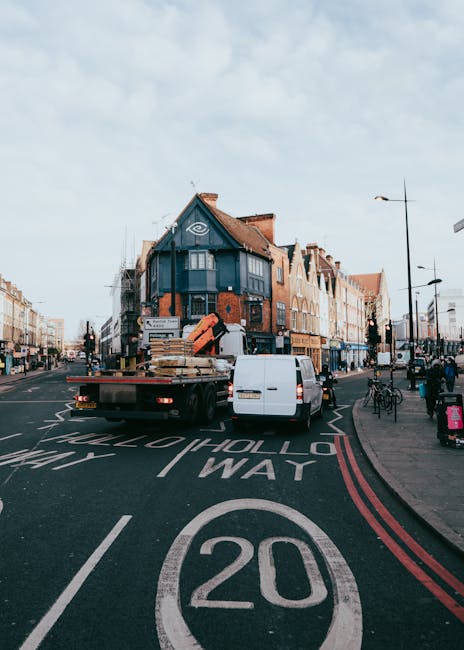
Spitalfields moving guide: navigating Brick Lane access
Posted on 26/05/2026
Moving in Spitalfields is rarely just about boxes, tape, and a van. If your route involves Brick Lane, you are dealing with a busy, characterful stretch of East London where narrow streets, pedestrian flow, delivery traffic, and parking realities can turn a simple relocation into a careful logistics exercise. This guide to Spitalfields moving guide: navigating Brick Lane access explains how to plan smartly, avoid common access problems, and make the move feel controlled rather than chaotic.
Whether you are leaving a flat above a shop, moving into a modern apartment, or handling a small office relocation, the main challenge is often not the lifting itself. It is the access. That means timing, vehicle choice, lift access, stair width, loading space, and a realistic plan for getting belongings from door to vehicle without unnecessary delays. A little preparation goes a long way here, and the difference is usually very noticeable on moving day.
For readers who want broader moving support beyond route planning, useful background can also be found in decluttering before you move, packing step by step, and the full services overview.

Why Spitalfields moving guide: navigating Brick Lane access Matters
Brick Lane sits within one of London's busiest and most layered neighbourhoods. That matters because moving day is time-sensitive, and access issues multiply quickly when streets are busy, kerbs are occupied, or a vehicle cannot stop exactly where you hoped. In a calm suburban move, a short carry from van to front door is a convenience issue. In Spitalfields, it can affect the whole schedule.
The practical reality is that access affects almost every other part of the move:
- how long loading takes
- whether a larger van can park safely and legally
- how many trips are needed
- how much carrying distance your team faces
- how likely it is that fragile items get bumped in hallways or stairwells
That is why the planning stage matters so much. If you know the access limitations in advance, you can choose the right vehicle, pack in the right order, and avoid that awkward moving-day moment where everyone stands around trying to work out where the van can actually stop.
It also matters for comfort and safety. When a route is tight, lifting becomes more awkward, turns are sharper, and the risk of damage rises. If you are moving furniture, especially awkward items such as a sofa, mattress, wardrobe, or piano, access planning is not a bonus. It is part of the job.
Expert summary: In Spitalfields, a successful move is usually won before the van arrives. Clear access planning around Brick Lane is what keeps timing realistic, protects belongings, and reduces stress on the day.
How Spitalfields moving guide: navigating Brick Lane access Works
The simplest way to think about access is this: the move only works smoothly if every step between the property and the vehicle has been mapped with the real street environment in mind. That includes where the van can wait, how items will be carried, how long the route takes, and whether building features create bottlenecks.
A good access plan usually starts with five questions:
- Can the vehicle stop close enough to load without blocking traffic or causing risk?
- Is there a safe route from the property to the roadside, including steps, tight corridors, or shared entrances?
- Do you need lift access, and if so, is it reliable and available at the right time?
- Are any items too large or awkward for the stairwell or doorway?
- Do you need extra packing, dismantling, or protective wrapping before moving starts?
For many residents, the best approach is to treat access like a separate project rather than a side note. A removal team can help with the vehicle and handling, but you still benefit from knowing the route, the loading point, and the building restrictions before moving day. If you need a broader service framework, pages such as Spitalfields removals, man and van support in Spitalfields, and local removal services can help contextualise the options.
In practice, the move tends to work best when items are staged in the right order. Large furniture comes out first if access is simplest from the front room or hallway. Fragile boxes are placed near the exit only when the loading team is ready. And if parking is difficult, the team should be prepared for a faster, more coordinated handoff. No drama, just a sensible sequence.
Key Benefits and Practical Advantages
Planning Brick Lane access properly gives you more than just convenience. It improves the quality of the whole move.
1. Faster loading and unloading
When the van position, entry route, and item order are all thought through, the pace of the move improves immediately. That means less waiting, fewer repeated carries, and a more efficient use of the team's energy.
2. Lower damage risk
Fewer awkward turns and shorter carry distances usually mean less opportunity for scratches, bumps, and dropped items. This matters especially for furniture with delicate finishes. If your move includes a sofa or upholstered item, you may also find this guide to preserving a sofa useful for longer-term protection.
3. Better cost control
Time is part of the cost equation in many removals. Delays caused by access issues can make a straightforward move more expensive, especially if extra labour or multiple trips become necessary. Planning ahead helps keep the scope realistic.
4. Less stress for everyone involved
Moving is already a decision-heavy day. Removing uncertainty around access gives you a calmer start. That alone is worth a lot. Truth be told, a move with one clear route and one clear vehicle plan feels very different from a move where everyone is improvising.
5. Better handling of specialist or awkward items
Items such as beds, wardrobes, exercise equipment, pianos, and large mirrors often need more than basic carrying strength. They need the right angle, the right wrapping, and a workable route. For more on specialist handling, see professional piano moving advice and bed and mattress transport tips.
Who This Is For and When It Makes Sense
This guide is most useful if your move involves any of the following:
- a flat or apartment near Brick Lane
- a property with limited street access or shared entrances
- a top-floor walk-up without convenient lift access
- a furniture-heavy move with large or fragile items
- a student move where time and budget are tight
- a small office or creative workspace relocation
It also makes sense if you are not moving far but still need the job done properly. Short-distance moves can be deceptively tricky because people assume access will be simple. In dense urban streets, that assumption is often wrong.
If you are a tenant preparing to vacate, a clean exit matters too. A useful companion read is move-out house cleaning guidance, which pairs well with planning your final moving day load.
Students, first-time movers, busy professionals, landlords assisting a turnover, and families moving with children all benefit from a structured access plan. The common thread is this: if you want the move to stay on schedule, you need to remove uncertainty early.
Step-by-Step Guidance
Here is a practical approach you can follow when preparing a move around Brick Lane access.
Step 1: Survey the property and route
Walk the path from the front door to the street. Note steps, narrow sections, awkward corners, shared hallways, or entrances that could create a bottleneck. If possible, measure large items against doors and stair turns. That small bit of preparation can prevent a very large headache later.
Step 2: Decide what should be moved first
Identify which items are bulky, fragile, or awkward. Beds, wardrobes, mirrors, desk units, and white goods usually need early attention. If you have not yet sorted your items, a decluttering pass can make the route simpler and the van load lighter. The article on decluttering before a house move is a practical place to start.
Step 3: Match the vehicle to the access
A larger van is not always the best choice if the street is difficult to stop on. Sometimes a more compact vehicle is easier to place close to the property and saves time overall. The goal is not simply to choose the biggest van available; it is to choose the one that fits the environment.
Step 4: Pack in an access-friendly order
Boxes should be clearly labelled by room and fragility. Keep essentials separate. If the route is awkward, make sure the first load into the van is also the easiest load to access at the destination. That avoids a slow unpacking process later. If you want packing structure, see our packing guide and packing and boxes support in Spitalfields.
Step 5: Protect furniture before it leaves the property
Padding, wrapping, blankets, corner protection, and mattress covers are worth the time. In tighter access areas, damage often happens during the carry rather than on the road. Good wrapping reduces risk while items are manoeuvred through turns and door frames. For more detail, read sofa protection advice.
Step 6: Coordinate timing carefully
In a busy area, a short delay can affect the whole move. Aim to avoid peak congestion where possible and make sure everyone involved knows when the van should arrive, when loading should begin, and who is responsible for building access or keys. If you need flexibility, a same-day removals option may be relevant in urgent situations, although availability will naturally depend on the day.
Step 7: Keep a clear path at both ends
At the old property, clear hallways and stair landings. At the new property, make sure the entry point is ready, keys are available, and you know where the first boxes should go. If the new place has storage needs, it can be sensible to plan temporary off-site support through storage in Spitalfields.
Expert Tips for Better Results
Small improvements can make a big difference in tight-access moves. Here are the ones that tend to matter most.
- Use room-by-room labels. It speeds up unloading and prevents boxes being stacked in the wrong place.
- Disassemble what you can. A flat-pack wardrobe panel is usually easier to carry than a fully assembled unit.
- Measure before move day. This is especially useful for sofas, beds, and tall furniture.
- Leave walking space. If the hall is narrow, even one unnecessary bag on the floor can slow the whole process.
- Keep one essentials box separate. Medications, chargers, documents, toiletries, and kettle items should not vanish into the back of the van.
- Use the right lifting technique. Good body mechanics matter more in stair-heavy buildings. A helpful background read is kinetic lifting techniques.
One more practical point: if the move includes heavy lifting that one person cannot safely manage alone, do not improvise. The route itself is enough of a challenge without adding avoidable strain. If you want a clear primer, see solo heavy lifting guidance.
And yes, moving day is one of the few times where a small roll of tape can suddenly feel like a heroic piece of equipment.

Common Mistakes to Avoid
Most access problems are not caused by one huge error. They are caused by several small assumptions stacking up. These are the ones to watch for.
Assuming the van can stop anywhere
In a busy East London street, stopping points are rarely guaranteed. If you do not have a realistic loading plan, the whole move can become slower and less predictable.
Ignoring building access details
Do not assume the lift will be available, the stairwell will be clear, or the entrance will be wide enough for large pieces. Check carefully before the move.
Not measuring large items
A sofa that fits in your current lounge may still be awkward to exit. Measure the item and the route. That simple step prevents a lot of unnecessary stress.
Packing too late
Last-minute packing leads to poor labelling, weak boxes, and rushed decisions about what to keep, move, or store. If you want to avoid the usual scramble, read how to keep a house relocation calm and collected.
Skipping furniture protection
Even a short carry can scratch walls, dent door frames, or mark furniture. Protection is not overkill; it is basic risk reduction.
Forgetting the destination layout
It is not enough to get items into the van. You also need to know where they are going when they come out. If the new home is still being sorted, storage can be the smarter halfway step than crowding every room at once.
Tools, Resources and Recommendations
A well-organised move does not need fancy equipment, but it does benefit from the right tools.
| Tool or Resource | Why It Helps | Best Used For |
|---|---|---|
| Removal blankets | Protects furniture during tight carries | Sofas, tables, wardrobes |
| Mattress bags | Keeps bedding clean and easier to handle | Bedrooms and student moves |
| Labels and markers | Speeds up unloading and room placement | All household moves |
| Trolley or sack truck | Reduces repeated lifting where terrain allows | Heavy boxes and appliances |
| Furniture tools | Makes dismantling faster and cleaner | Beds, desks, modular furniture |
| Storage option | Buys time when access or timing is tight | Staged moves and downsizing |
For service-related guidance, the most relevant pages are man with a van in Spitalfields, house removals in the area, and furniture removals for bulky items. If your move is lighter or more flexible, a dedicated removal van may be all you need.
For safety and trust details, it is also sensible to review insurance and safety information and the company's health and safety policy.
Law, Compliance, Standards, or Best Practice
Moving in central London does not usually require the customer to understand every transport or parking rule in detail, but it does help to work within accepted local practice. In a setting like Brick Lane, that means respecting road restrictions, avoiding unsafe stopping, and planning loading in a way that does not create unnecessary obstruction or risk.
From a best-practice perspective, a reliable move should follow a few principles:
- Safe access first. The quickest route is not always the safest one.
- Clear communication. Everyone should know where the vehicle is waiting and when loading starts.
- Appropriate vehicle choice. A smaller van may outperform a larger one if space is tight.
- Protected handling. Walls, floors, furniture, and door frames should all be protected where needed.
- Reasonable lifting practice. Heavy items should be carried by trained or experienced people, especially on stairs.
It is also sensible to choose a provider that is transparent about policies, terms, complaints handling, payment security, and accessibility. Those details may not sound glamorous, but they matter when you want a move that is organised and accountable. Useful reference pages include about us, terms and conditions, payment and security, and accessibility information.
Options, Methods, or Comparison Table
Not every move in Spitalfields needs the same level of support. The best method depends on access, item size, timing, and how much help you want on the day.
| Approach | Best For | Strengths | Trade-offs |
|---|---|---|---|
| DIY van hire | Small, simple moves with open access | Budget control, flexibility | More physical work, more risk if access is tight |
| Man and van | Light-to-medium moves in busy streets | Practical, efficient, adaptable | May not suit larger furniture-heavy relocations |
| Full removals service | Complex homes, larger loads, difficult access | More support, better handling, less stress | Usually more expensive than basic transport |
| Storage-assisted move | Staged relocations or delayed entry | Flexible timing, less clutter on move day | Requires extra planning and possible additional cost |
In practical terms, a local removal company is often the safest choice if you have awkward access, heavy furniture, or a deadline. A lighter move may be perfectly suited to man and van support. The point is to match the method to the actual street, not to the ideal version of the street in your head.
Case Study or Real-World Example
Consider a typical Spitalfields flat move: one-bedroom apartment, second floor, narrow staircase, and a street near Brick Lane where stopping space is limited. The resident has a sofa, double bed, several boxes, a desk, and a few fragile items.
Without planning, the move could easily run into trouble. The van might arrive too early and have nowhere sensible to wait. Boxes may be stacked near the door before the loading team is ready. The sofa might be discovered to be too awkward for the staircase angle, forcing an unplanned rethink.
With good preparation, the process changes completely. The resident measures the sofa and bed frame in advance, dismantles the bed, labels every box, and separates fragile items. The mover uses a compact vehicle, arrives at an agreed time, and starts with the largest items while the entrance is clear. The result is not just a faster move. It is a calmer one.
This is the real value of access planning. It turns unpredictable effort into controlled sequence. That may sound boring, but on moving day boring is often exactly what you want.
Practical Checklist
Use this checklist the day before and the morning of the move.
- Confirm the vehicle size and arrival time
- Check the loading route from door to street
- Measure any bulky furniture against doorways or stair turns
- Protect sofas, mattresses, mirrors, and sharp corners
- Label boxes clearly by room
- Keep essentials separate and easy to access
- Clear hallways, landings, and entry points
- Check if lift access is available and working
- Prepare keys, codes, and entry instructions
- Set aside any items going into storage
- Review payment, terms, and contact details
- Have water and a phone charger ready. You will thank yourself later.
If you are still building out your plan, you may also want to review decluttering techniques for moving success and simple strategies for a stressless house move.
Conclusion
Moving around Brick Lane is manageable when you treat access as the central issue rather than an afterthought. The streets are lively, the footfall is constant, and the logistics are more demanding than a standard residential move. But that is exactly why a structured approach works so well.
If you plan the route, choose the right vehicle, protect your belongings, and keep the loading sequence sensible, the move becomes much easier to control. That applies whether you are moving a small flat, a family home, a student room, or a business workspace.
For readers who want a smoother experience from start to finish, the best next step is to combine access planning with support from a trusted local team. If you need extra help with packing, furniture handling, or temporary storage, those services are there to make the day simpler, not more complicated.
Get a free quote today and see how much you can save.